In the age of digital transformation, dematerialisation is an essential lever for modernising organisations. It refers to the process of transforming a paper document or information flow into an electronic version, to make it easier to manage, share and store.
Dematerialisation: a simple definition
Dematerialisation involves converting physical (paper) documents into digital files. This can be done by scanning using scanners or multifunction printers, or by creating digital documents directly, without ever going through the printing stage.
It applies to a wide range of documents: invoices, payslips, contracts, correspondence, expense claims, etc. Once digitised, these documents can be stored, filed, consulted and transmitted more easily, while increasing their security.
Digitisation and dematerialisation: what’s the difference?
Digitisation is a component of dematerialisation, but it is only one aspect.
- Scanning: action of scanning a paper document to obtain an electronic version (e.g. PDF).
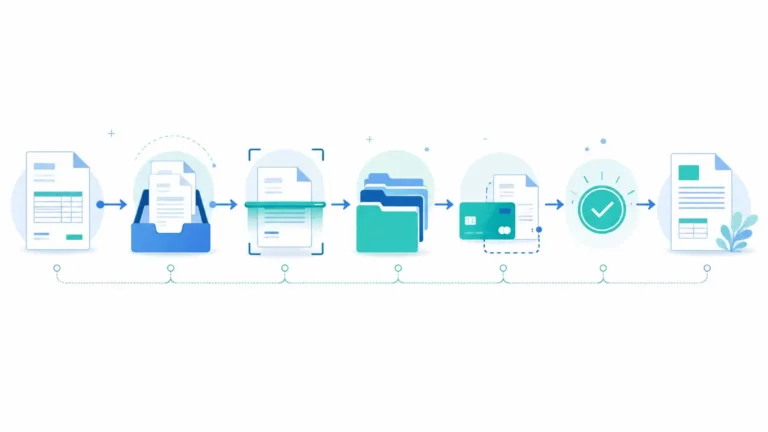
- Dematerialisation: this encompasses digitisation, but also the integration of these documents into digital workflows, their electronic signature, secure archiving, and often their automated processing.
Dematerialisation is therefore part of the process of digitalising business processes, and goes far beyond simple scanning.
Why dematerialise? The benefits for businesses
Adopting dematerialisation offers a number of tangible benefits for businesses:
- Time savings: less manual handling, quick access to documents, reduction in repetitive tasks.
- Lower costs: less paper, less printing, less physical storage space.
- Enhanced security: automated back-ups, controlled access, protection against loss or damage (fire, theft, etc.).
- Regulatory compliance: Compliance with legal requirements (RGPD, archiving with probative value, electronic invoicing).
- Improved collaboration: documents shared easily internally or with partners, faster validation.
How do you set up a paperless system?
There are two main scenarios:
- From paper documents: The first step is to digitise (scan) them, then integrate them into a document management system.
- From natively digital documents: In this case, they are produced and distributed directly in electronic format, without any paper being generated. For example, pay slips or invoices generated by software are transmitted via secure platforms.
In all cases, it is essential to put the right tools in place to manage these documents effectively: EDM (Electronic Document Management) software, electronic signature solutions, digital safes, etc.
Which documents can be dematerialised?
Dematerialisation concerns a wide variety of business documents:
- Customer and supplier invoices
- Contracts and amendments
- Pay slips
- Expense reports
- HR documents
- Administrative correspondence
- Miscellaneous supporting documents
It can be partial (some documents remain in paper form) or total, depending on requirements and applicable regulations.
EDM: a pillar of dematerialisation
Electronic Document Management (EDM) plays a central role in any dematerialisation strategy. It enables electronic documents to be centralised, classified, searched, shared and archived in a structured way.
Thanks to an EDM solution, companies gain in productivity, traceability and compliance. It also makes it easier to access and secure information.
In a nutshell
The dematerialisation of documents is much more than just a trend: it’s a strategic step for companies looking to improve efficiency, reduce costs and comply with new regulations. By relying on appropriate tools such as EDM and secure archiving solutions, the transition to digital technology becomes a real opportunity for transformation.