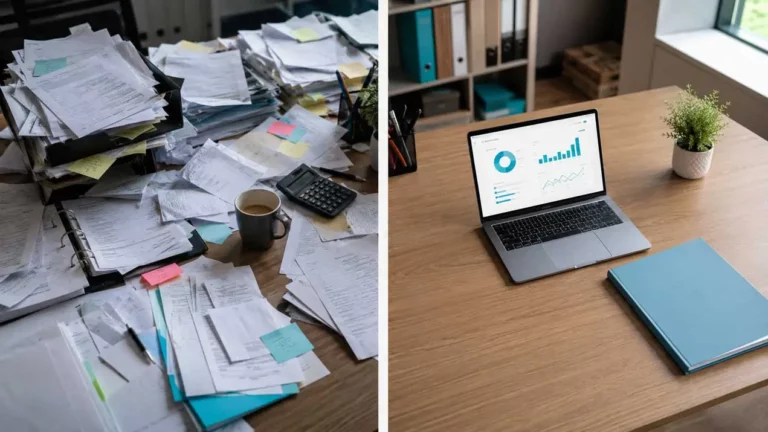

Electronic invoicing in agriculture is set to be a major change from 2026. All farms, including winegrowers, GAEC structures and certain micro-BA activities, will have to adapt their invoice management to comply with this reform.
But beyond the regulatory constraints, this development represents an opportunity: to automate administrative management thanks toAI, improve pre-accounting and gain in efficiency.
In this comprehensive guide, we decipher the obligations, specific agricultural cases and practical solutions for anticipating the reform.
Electronic invoicing for agriculture: a structural transformation
The reform of electronic invoicing is not limited to the dematerialisation of invoices. It imposes a new data exchange model.
A compliant electronic invoice must :
- Be issued in a structured format (Factur-X, UBL, CII)
- Transiting through a state-approved platform (PA, formerly PDP)
- Be sent automatically to the tax authorities
👉 A simple PDF invoice sent by email will no longer suffice.
Why this reform?
The aim is threefold:
- Combating VAT fraud
- Simplifying reporting obligations
- Digitalising exchanges between companies
For farms, this means rapidly modernising management tools.
Timetable for electronic invoicing for farms
The reform is gradually being applied to all companies, including agricultural and wine-growing businesses.
Key dates :
- 1st September 2026
- Compulsory receipt of electronic invoices for all companies
- Compulsory issue for large companies
- 1st September 2027
- Compulsory issue for SMEs, VSEs and farms
👉 This directly concerns :
- individual farms
- GAECs
- EARLs
- agricultural cooperatives
Agriculture and viticulture: specific cases to master
The agricultural sector has specific characteristics that make compliance more complex.
Multiple flows
A farm can combine :
- sales to cooperatives
- direct sales (markets, cellars)
- sales to distributors
- export
👉 Each flow involves different rules.
Electronic wine invoicing: managing the complexity of sales
Winegrowers are particularly affected by the diversity of sales channels.
Common cases:
- Cellar sales (B2C) → e-reporting
- Sales to distributors (B2B) → electronic invoicing mandatory
- Export → specific transmission obligations
GAEC electronic invoicing: managing several partners
GAECs (Groupements Agricoles d’Exploitation en Commun) present specific challenges:
- several partners
- multi-user management
- higher invoice volumes
They must :
- centralise billing flows
- ensure complete traceability
- facilitate collaboration with the chartered accountant
Micro-BA and electronic invoicing: what are the obligations?
The micro-BA scheme often raises questions.
Case 1: micro-BA with VAT
- subject to electronic invoicing
- subject to e-reporting
Case 2: micro-BA without VAT (exemption)
- no obligation to issue
- but e-reporting possible
👉 In practice, even micro-BAs have to equip themselves to anticipate changes.
E-reporting in agriculture: an often underestimated challenge
E-reporting concerns :
- sales to private individuals
- foreign sales
Even if there is no electronic invoice, the data must still be sent to the authorities.
👉 Example:
- sale on a market
- cellar sales
- wine export
Agricultural cooperatives and self-billing
In many cases, cooperatives issue invoices on behalf of farmers (self-billing).
Consequences:
- compulsory electronic invoicing for cooperatives
- transmission via an Approved Platform (AP, ex-PDP)
- integration into the operator’s accounts
👉 Read: agricultural cooperatives and electronic invoicing: blog.azopio.com/en/electronic-invoicing-and-agricultural-cooperatives-what-will-change-from-2026/
Agricultural VAT and electronic invoicing
The reform will have a direct impact on VAT management:
- automated data transmission
- pre-filling of returns
- enhanced control
👉 This means more rigorous invoice management.
Why adopt farm invoicing software?
In view of these obligations, farm invoicing software is essential.
Key features :
- issue compliant invoices
- connection to an Approved Platform (AP)
- multi-activity management
- payment tracking
Farm pre-accounting: automate invoice management
Pre-accounting is a major lever for farms.
Objective:
Automatically prepare accounting data before sending it to the chartered accountant.
Thanks to AI :
- automatic reading of invoices
- data extraction
- intelligent categorisation
- generation of entries
👉 Result:
- time saving
- error reduction
- better financial visibility
👉 Read more: Farmers: centralise your documents and manage your cash flow with Azopio
AI and agriculture: towards automated management
AI is transforming the administrative management of farms:
- automatic document recognition
- anomaly detection
- flow automation
Particularly useful for :
- GAECs
- multi-activity farms
- structures with a high volume of invoices
How do you prepare for electronic invoicing?
1. Map your flows
- B2B
- B2C
- export
2. Identifying your obligations
- electronic invoicing
- e-reporting
3. Choosing the right software
4. Setting up a pre-accounting system
FAQ – Electronic invoicing for agriculture
Which farms are affected?
All agricultural and wine-growing businesses subject to VAT are affected by the reform, for their purchase and sales invoices.
This includes
- Direct sales farms
- Farmers selling to cooperatives
- Winegrowers selling to professionals or individuals
- Agricultural contractors
Are GAECs affected?
Yes, fully, with greater challenges linked to their organisation.
Are micro-BA farms affected by electronic invoicing?
Yes, farms covered by the micro-BA scheme may be affected, depending on their VAT status.
- If the business is subject to VAT, it will have to apply electronic invoicing for its B2B transactions and e-reporting if necessary.
- If it is exempt from VAT, it is not required to issue electronic invoices, but may be concerned by the transmission of data (e-reporting).
Even in this context, pre-accounting software allows you to anticipate changes and structure your management.
How does electronic invoicing work with agricultural cooperatives?
Relationships with cooperatives are common in the agricultural sector.
There are two main situations:
- Traditional invoicing (the farm invoices the cooperative):
The farmer will have to issue a compliant electronic invoice via an approved platform. - Self-billing (the cooperative issues the invoice on behalf of the operator):
The cooperative will have to generate a compliant electronic invoice and transmit it via the regulatory system.
In both cases, the flows will have to pass through a dematerialisation platform, with integration into the operation’s management tools.
Are sales to private individuals affected?
Yes, via e-reporting. Sales data must be transmitted to the tax authorities even if there is no traditional electronic invoice.
Is a PDF invoice enough?
No. A PDF invoice alone is not compliant. It must be structured (e.g. Factur-X) and pass through an approved platform.
Which electronic invoicing solution should you choose for your winegrowing business?
The choice of electronic invoicing software is a strategic one for wineries, which often combine several sales channels (B2B, cellar, export).
Essential criteria to take into account:
- Compatibility with the reform (structured formats, PA connection)
- Multi-activity management (direct sales, distributors, export)
- Automation via AI (reading and processing invoices)
- Integration with your accounting system or chartered accountant
- Easy to use in the field
A solution that includes pre-accounting enables you to go further by automating invoice processing and facilitating financial management.
Anticipate electronic invoicing now
Electronic invoicing in agriculture is not just an obligation: it’s an opportunity to modernise.
Automate your management with Azopio:
- automatic invoice collection
- extraction via AI
- integrated pre-accounting
- 2026 compliance
👉 Discover our solution and prepare your operation today.
Conclusion
The reform of electronic invoicing is profoundly transforming the management of farming and winegrowing businesses.
Between regulatory obligations, diverse flows and productivity challenges, operators have to adapt quickly.
By using modern tools combining software, AI and pre-accounting, it is possible to transform this constraint into a sustainable competitive advantage.