
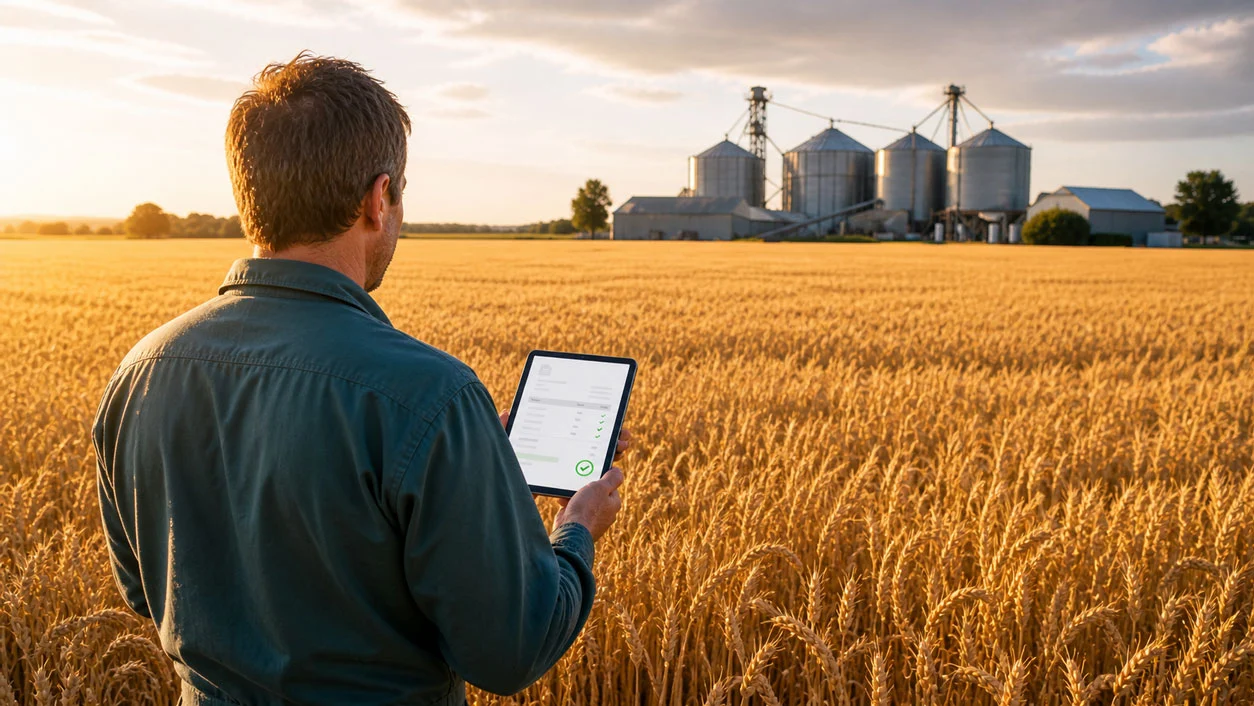
Electronic invoicing for GAECs (Groupements Agricoles d’Exploitation en Commun) will be a compulsory requirement from 2026. Like all agricultural businesses, GAECs will have to adapt their invoice management to meet the new tax requirements.
But with their specific organisation (several partners, multiple flows, collective management), GAECs are particularly concerned by the challenges of automation, traceability and accounting collaboration.
Here is a complete guide to understanding and anticipating the reform.
GAEC and electronic invoicing: are you concerned?
Yes, all GAECs subject to VAT are affected by the reform.
This involves :
- Compulsory receipt of electronic invoices from 2026
- Mandatory electronic invoicing from 2027
- Data transmission (e-reporting) for certain operations from Sept. 2027
👉 In practice, this concerns the majority of GAECs, particularly those :
- selling to cooperatives
- working with distributors
- making professional sales
Why GAECs are particularly affected
The very structure of a GAEC amplifies the challenges associated with electronic invoicing.
1. Multiple users
A GAEC involves several partners who :
- issue or receive invoices
- manage various activities
- access documents
👉 Without a suitable tool, this leads to :
- loss of information
- duplicates
- input errors
2. Larger volume of invoices
A GAEC brings together several agricultural activities:
- production
- purchase of equipment
- relations with cooperatives
👉 The result: a high volume of invoices that are difficult to manage manually.
3. Working with the chartered accountant
Managing the accounts of a GAEC requires :
- rigorous organisation
- seamless document sharing
- complete traceability
👉 Electronic invoicing requires even stricter structuring.
How does electronic invoicing work for a GAEC?
The principle is identical to that of other companies, but with greater organisational implications.
1. Issuing invoices
The GAEC must :
- issue electronic invoices in structured format
- transmit them via an approved platform (PA) from September 2027
2. Receipt of invoices
From September 2026, electronic invoices from large suppliers (SMEs and major groups) will be :
- received via an approved platform
- automatically integrated into the system
3. E-reporting
From September 2027, certain transactions will have to be declared:
- sales to private individuals
- international sales
Special case: GAECs and agricultural cooperatives
GAECs often work with cooperatives.
Two cases:
Standard billing
The GAEC issues an electronic invoice.
Self-billing
The cooperative issues the invoice for the GAEC.
👉 In both cases :
- the invoice must be electronic
- it must transit through an approved platform (AP)
GAEC electronic invoicing and VAT
GAECs are generally subject to VAT, which means :
- regular transmission of data
- automated declarations
- tighter controls
👉 Poor invoice management can lead to :
- VAT errors
- tax risks
Why software is essential for a GAEC
With the organisational complexity of a GAEC, electronic invoicing software is not an option. It will become a requirement from September 2026 for reception.
Key features :
- multi-user management
- centralisation of invoices
- shared access
- complete traceability
GAEC pre-accounting: a key lever
Pre-accounting automates invoice management.
In concrete terms :
- invoices are collected automatically
- the data is extracted via AI for the rest of the dematerialised invoices (from very small businesses between 2026-27 and foreign suppliers)
- entries are prepared
👉 Result:
- massive time saving
- error reduction
- greater collaboration
AI and GAEC invoice management
AI is particularly useful for GAECs:
- automatic recognition for dematerialised invoices
- intelligent categorisation
- detection of anomalies, such as duplicates
👉 This makes it possible to manage a large volume of documents efficiently.
How do you choose invoicing software for a GAEC?
Essential criteria :
- compatibility with the reform (PA-approved platform)
- multi-user management
- automation via AI
- accounting integration
- ease of use
👉 The wrong tool can quickly become a hindrance.
Best practice in anticipation
1. Structuring flows
Identify who manages what in the GAEC.
2. Centralise documents
Avoid scattered invoices.
See article: blog.azopio.com/en/farmers-centralise-your-documents-and-manage-your-cash-flow-with-azopio/
3. Automate management
Limit manual tasks.
4. Working with your accountant
Align the tools.
FAQ – GAEC electronic invoicing
Are GAECs obliged to switch to electronic invoicing?
Yes, as long as they are subject to VAT.
How many users can access invoices?
It depends on the software, but multi-user management is essential for a GAEC.
How do you manage invoices between partners?
A centralised tool makes it possible to share documents and avoid duplication.
Are sales to private individuals affected?
Yes, via e-reporting.
Can I continue to use PDF invoices?
No, they will no longer be compliant.
Simplify electronic invoicing for your GAEC
Use Azopio to automate the management of your agricultural invoices:
- automatic invoice collection
- data extraction via AI
- integrated pre-accounting
- multi-user management
- compliance with the reform
👉 Find out how to equip your GAEC today.
Conclusion
Electronic invoicing for GAECs represents both a structural change and an opportunity.
Thanks to automation, AI and pre-accounting, GAECs can :
- save time
- secure their management
- improve their organisation
Anticipating now is the key to turning this obligation into a competitive advantage.