You run a small business. You send your invoices as PDFs by email, your suppliers send theirs to you in the same way, and it’s worked fine for years. So when people talk to you about “mandatory electronic invoicing”, “Approved Platforms” or “Factur-X format”, your first reaction is often the same: will I have to change everything?
The short answer: no. But you still have deadlines to meet.
In this article, we explain what will actually change for very small businesses, what you can keep, and the practical steps you can take to make a smooth transition. For more information on the reform, see our comprehensive guide to electronic invoicing 2026–2027.
1. What’s changing — and what isn’t
The two key dates to note
The electronic invoicing reform is not being implemented all at once. It is being rolled out gradually, with separate timelines for receiving and issuing invoices.
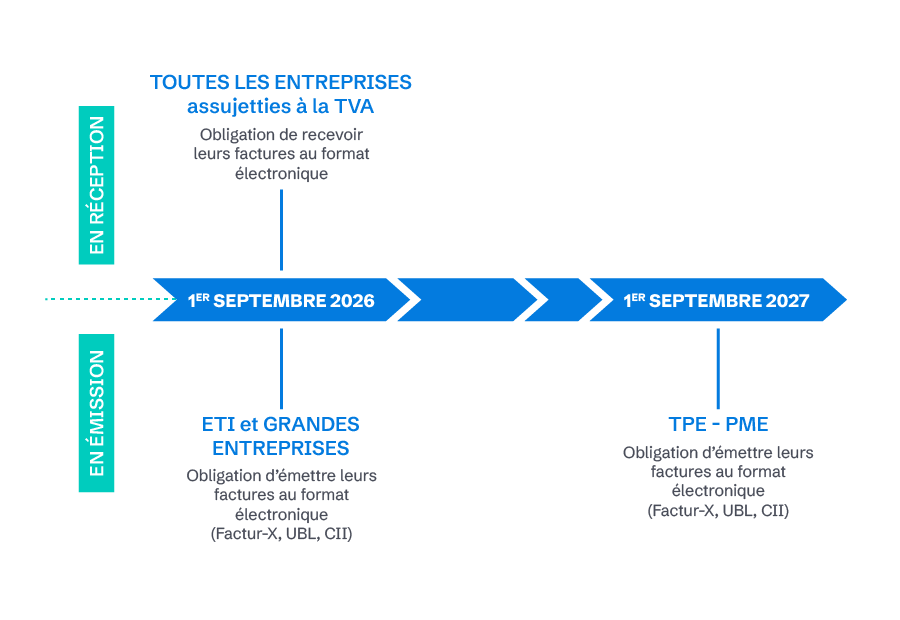
1 September 2026: all businesses liable for VAT, regardless of their size, must be able to receive electronic invoices via an Approved Platform. This is a universal requirement — including micro-enterprises.
1 September 2027: Micro-enterprises and SMEs will also be required to issue their invoices in electronic format (Factur-X, UBL or CII) and submit their transaction data to the authorities (e-reporting).
| 💡 In practice: from September 2026, you must be ready to receive e-invoices. You have an extra year to adapt your own invoicing systems. Make the most of this time to prepare for both with peace of mind. |
What you DON’T need to change
Many owners of very small businesses fear they will have to replace everything. In reality, the reform does not affect:
- Your accounting software — it keeps working — for accountants
- Your relationship with your accountant — the PA simply facilitates the transfer of documents.
- Your invoices issued to private individuals (B2C) — these are not subject to e-invoicing (but are subject to e-reporting).
2. What e-invoicing really is (without the jargon)
Under the reform, an electronic invoice is not simply a PDF sent by email. It is a structured data file — readable by both humans and software — which must be transmitted via an Approved Platform (PA) registered with the DGFiP.
The most widely used format in France is Factur-X: a hybrid file that looks like a standard PDF, but also contains structured data (XML) that can be automatically processed by your software. In practical terms, you see a normal invoice, and your accountant can import it in just a few clicks.
The Approved Platform, meanwhile, acts as a trusted intermediary: it routes the invoice between the issuer and the recipient, transmits the data to the tax authorities, and keeps a record of the invoice’s entire lifecycle.
3. The 4 steps to making the transition without having to start from scratch
Step 1 — Take stock of your current cash flows
Before choosing a tool, answer three simple questions:
- How many supplier invoices do I receive on average each month?
- Is my current software already connected to an Approved Platform? Or is it itself an Approved Platform?
- Do I charge only private individuals, only businesses, or both?
If you invoice private individuals exclusively, you are subject to e-reporting but not to e-invoicing. If you have business customers (B2B), you will be required to issue invoices electronically from September 2027.
Step 2 — Choose your Approved Platform
This is the key step. Your PA must be officially registered with the DGFiP — check the list on impots.gouv.fr. Opt for a solution that also includes EDM (document archiving) and integrates with your accounting software to avoid having to re-enter data. See article: EDM and e-invoicing: why managing them separately costs you money | Azopio
At Azopio, the API is included in all subscriptions: no extra cost, no complicated setup. Just activate it, and you’re all set.
Step 3 — Activate reception before September 2026
The first deadline is for receiving invoices. From 1 September 2026, your major suppliers (mid-sized and large companies) will be required to issue invoices electronically. If you are not equipped to receive them, you will no longer be able to process their invoices correctly.
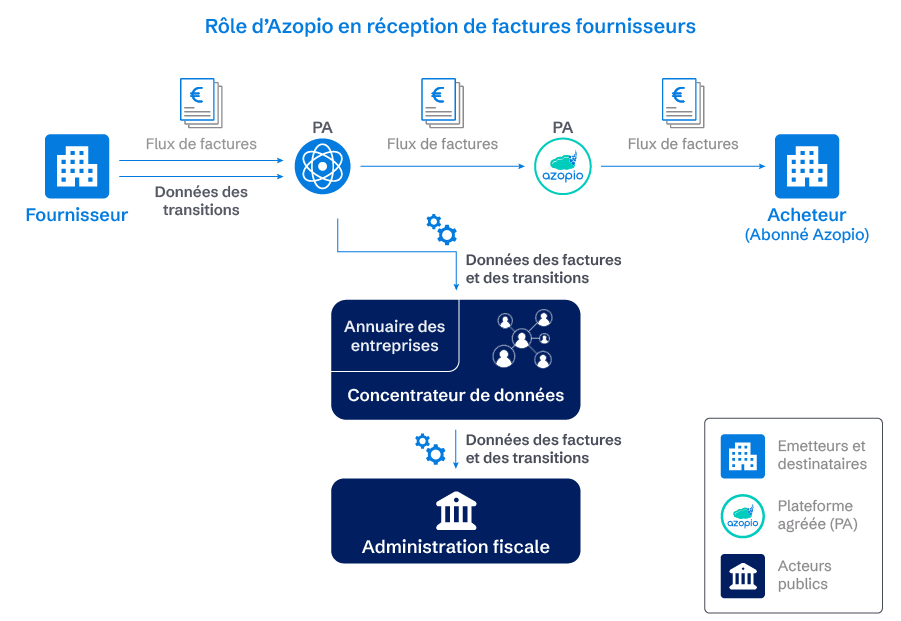
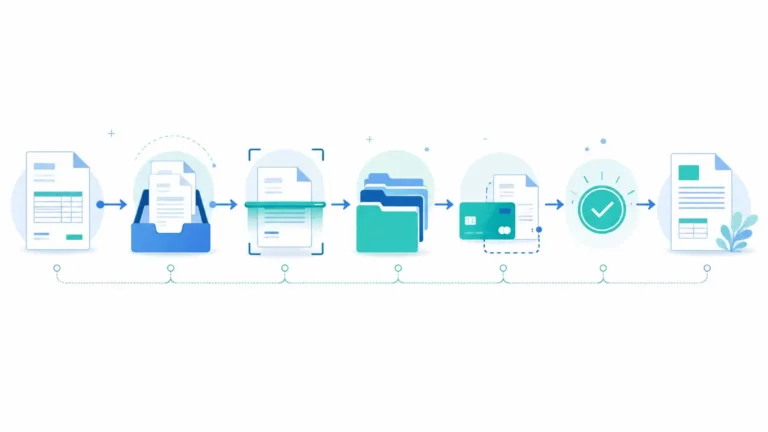
In practice: your supplier sends their invoice via their own payment gateway. This payment gateway queries the central directory to identify your platform. The invoice is then forwarded to you automatically. You don’t need to do anything manually.
Step 4 — Prepare for the broadcast in September 2027
You have until 1 September 2027 to apply. But start thinking about it now so you’re ready when the time comes!
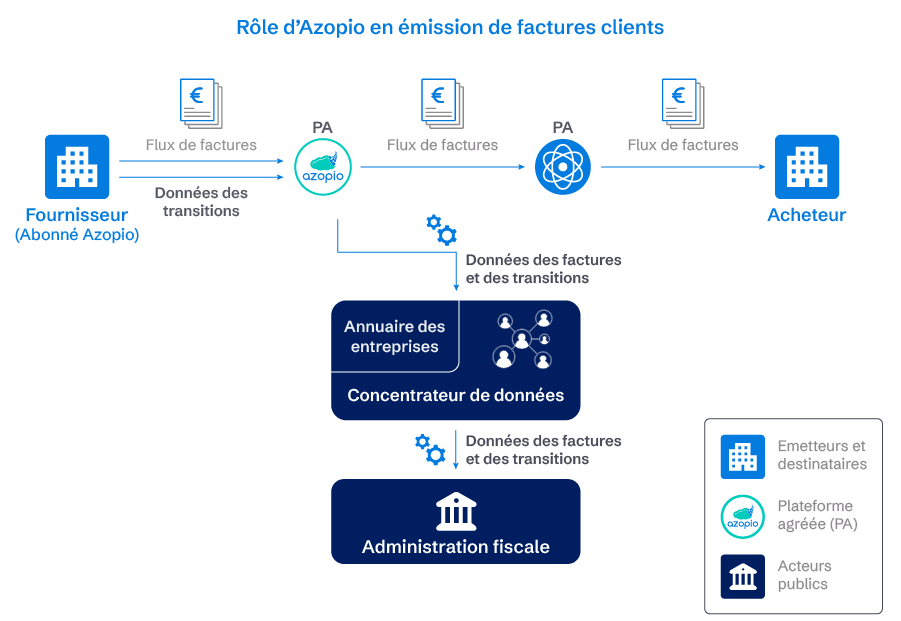
With e-invoicing integrated into your invoicing software, the process is seamless: you create your invoice in electronic format, and your software automatically forwards it to your customer’s e-invoicing system. You can track the status (sent, received, paid) in real time within your software on a dedicated page.
With a compatible solution (CS) connected to a payment gateway (PG), you create your invoice as usual and the CS handles sending it to the third-party PG in its own way. The third-party PG will then route it to your customer’s PG. The invoice lifecycle statuses will be available on the third-party PG.
4. What a good PA does for you — automatically
The benefit of a well-designed Approved Platform is precisely that it relieves you of the technical aspects of the reform. In practical terms, it must:
- Receive and process electronic invoices from your suppliers, regardless of their format (Factur-X, UBL, CII).
- Manage invoice lifecycle statuses
- Generate your customer invoices in the correct format without having to worry about the technical specifications.
- Automatically submit data to the tax authorities (e-reporting) in accordance with the statutory reporting schedule.
- Ensure your invoices are legally archived for 10 years — without you having to manage a separate archiving system.
- Integrate with your accounting software to eliminate the need for re-entry.
| 💡 Azopio is an Approved Platform officially registered with the DGFiP. The Approved Platform is included in all subscriptions, along with document management and automated pre-accounting. A single solution to manage everything. |
Find out how Azopio supports micro-businesses on a day-to-day basis:
Electronic invoicing: Azopio, Approved Platform
5. Mistakes to avoid
- Wait until September 2026 to get set up. Take the time to plan ahead so you can familiarise yourself with the system before it comes into force. Bear in mind the summer holidays and the possibility of staff being absent or unavailable when it comes to decision-making or implementation.
- Choose a “compatible solution” rather than a native invoicing application. A compatible solution relies on a third-party invoicing application itself — you have less visibility and control over the status of your invoices.
- Ignoring incoming invoices because the outgoing ones are due later. From September 2026, your mid-market suppliers will send you electronic invoices. If you are unable to receive them, you will be holding up your own accounts.
In summary
Electronic invoicing isn’t a radical change to your daily routine — it’s an upgrade to your infrastructure. You keep your usual routines, your accountant and your processes. You simply add an Approved Platform that handles the regulatory aspects for you.
The bottom line: don’t wait. The deadline for acceptance is fast approaching – there are only a few months left before the September 2026 deadline. Choose a reputable PA now, initiate the acceptance process, and prepare for the 2027 issue without rushing.
| Azopio is a registered Approved Platform, designed for micro-businesses and SMEs. PA + EDM + pre-accounting included in all subscriptions, at no extra cost. → Discover Azopio’s offers for micro-businesses |