
Many SCI companies exempt from VAT believe they are completely excluded from the electronic invoicing reform.
👉 “I don’t charge VAT, so this doesn’t apply to me.”
This is a common misconception.
In reality, even without VAT, your SCI, once it has registered as a taxable entity, will be affected from 2026 onwards, particularly in one key area:
👉 the receipt and management of supplier invoices
In this article, we explain why this affects you, what the practical changes will be, and how you can easily prepare for them.
VAT-exempt SCI: a special status
Most SCI companies are exempt from VAT, particularly in the following cases:
- unfurnished residential let
- lack of commercial activity
- rent not subject to VAT
👉 In this configuration:
- you do not collect VAT
- you don’t usually issue complex invoices
This status gives the impression of being outside the reform.
Electronic invoicing: what won’t change for you
Good news: some of these requirements do not apply to you.
❌ No obligation to issue electronic invoices
If your SCI is exempt from VAT:
- You are not required to issue B2B e-invoices
- you don’t need to generate structured formats
❌ No e-reporting
Nor do you need to:
- to submit transaction data to the authorities
- report transactions via e-reporting
👉 This makes things much simpler for you.
What’s changing from 2026: the receipt of invoices
This is where the reform affects you directly.
👉 From 1 September 2026, all businesses must be able to:
✔ receive electronic invoices via an Approved Platform (AP)
This includes:
- property investment companies
- even if they are exempt from VAT
However, if your SCI merely makes a property available to its members free of charge (without charging rent), it is not carrying out an economic activity. It is therefore not liable for tax and is completely exempt from the reform.
Why does this requirement also apply to exempt property companies?
The rationale behind the reform is simple:
👉 Any organisation that has suppliers must be able to receive electronic invoices.
However, a property investment company (SCI) inevitably receives invoices:
- construction and maintenance
- insurance
- fees (accountant, solicitor, etc.)
- various service providers
Your suppliers will gradually switch to electronic invoicing.
You must therefore be able to receive them.
👉 See the full guidance issued by the government on the obligations of SCI companies regarding electronic invoicing: https://www.impots.gouv.fr/sites/default/files/media/1_metier/2_professionnel/EV/2_gestion/290_facturation_electronique/fiches_reforme/fiche-sci.pdf
What this means in practical terms for your property investment company
1. End of 100% email/PDF operation
Today, you’re probably receiving:
- PDF invoices by email
- paper documents
Tomorrow:
👉 Invoices will be processed via an Approved Platform
2. Requirement to have a structured entry point
You will need to:
- have a system for receiving invoices
- view the documents
- keep them
👉 Even without a broadcast, a minimum level of organisation is required.
3. Increase in digital volumes
With the roll-out of the reform:
- All your invoices will be sent electronically
- traffic is set to increase
- manual management will become more complex
The real challenge: the digitisation of supplier invoices
For a tax-exempt property company, the main issue is not invoicing… but:
👉 Supplier invoice management
Without the right tools:
- manual download of invoices
- scattered ranking
- difficulty finding documents
- difficult to track payments
Why plan ahead now?
Waiting until 2026 might seem tempting… but it’s not advisable.
1. Avoid rushing into compliance
Deadlines may be tight for:
- choose a tool
- understand how it works
- get organised
2. Simplify your management today
Implementing a solution immediately enables you to:
- centralise invoices
- automate their processing
- improve administrative management
3. Improve financial transparency
With better organisation, you can:
- track your spending
- identify pending payments
- manage your property investment company more effectively
Take it a step further: automate the management of your property investment company
Even without any obligation to issue shares, an SCI can take advantage of the reform to modernise its management.
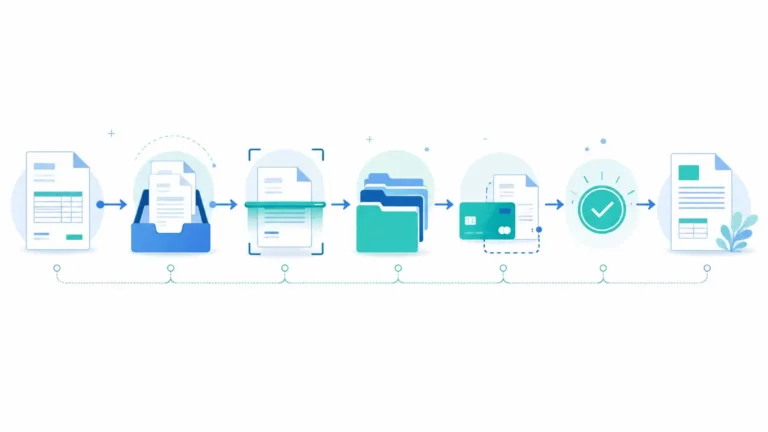
Centralise supplier invoices
All invoices are consolidated in a single tool.
Automate data collection
Invoices are retrieved automatically (via email, the platform, etc.).
Track payments
Do you know what invoices are:
- paid
- pending
- late
A simple solution for property investment companies
Solutions such as Azopio enable you to:
- manage the digitisation of supplier invoices
- centralise documents
- track payments
- streamline administrative procedures
👉 The aim: to keep things simple, without making the management of a property investment company more complicated.
Mistakes to avoid
❌ Thinking it doesn’t apply to you
❌ Waiting until the last minute
❌ Continuing with 100% manual management
❌ Using too many tools
👉 The right approach: simply plan ahead with a suitable solution.
Conclusion
Even though it is exempt from VAT, an SCI that is liable for VAT is not entirely exempt from the electronic invoicing reform.
👉 From 2026, you will need to be able to receive electronic invoices.
But above all:
👉 The reform highlights an existing need:
better management of supplier invoices
By planning ahead now, you can:
- streamline your organisation
- save time
- improve your financial visibility
👉 and turn a challenge into an opportunity.